
Check the blocking before you polish the clip
The shot needed someone standing. A mirror. A weight in each hand. The other person caught in the reflection, then a turn, and both weights dropped.
The clip that came back was easy to like. Sharp, lit, a body that held together. It was also sitting down. One weight, a bench, no mirror beat. I could not cut it as the shot I had written, so I threw it out.
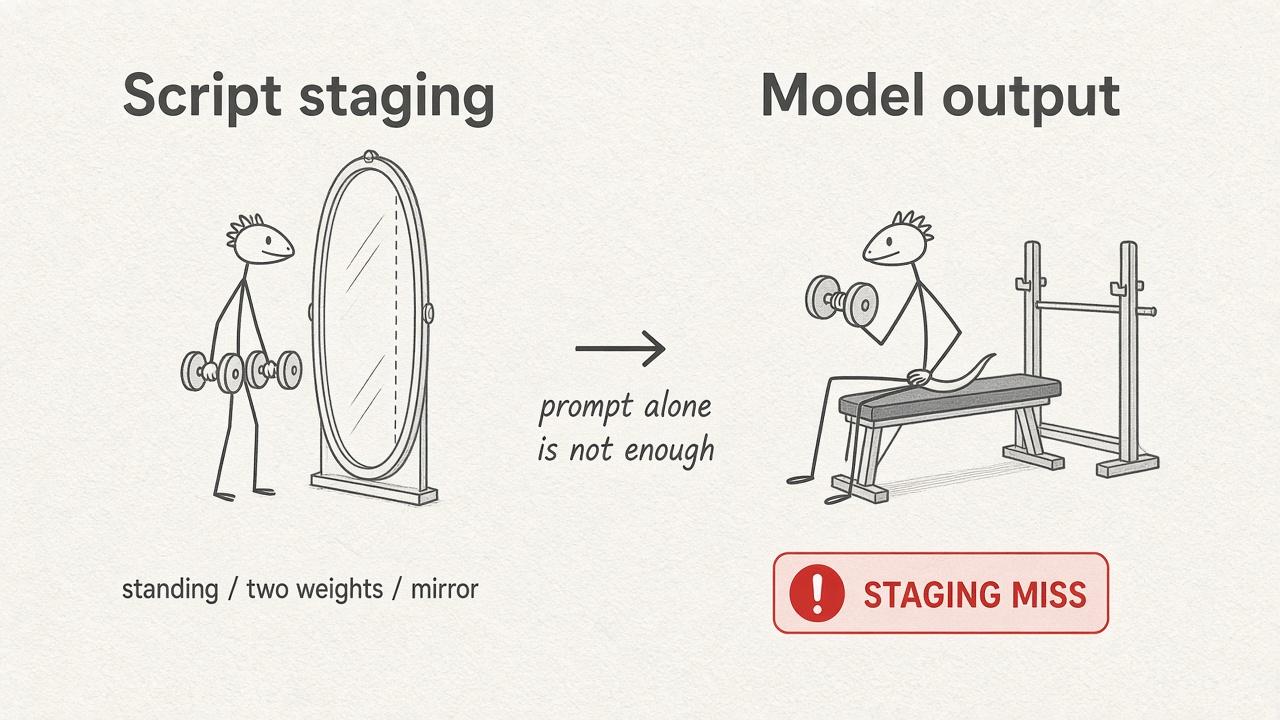
The written staging is on the left. The render is on the right. The second picture cannot play the beat.
I look at blocking before I look at polish. Standing or seated. How many things are in the hands. Where the eyes go. The action the next cut needs. If those are wrong, the resolution does not matter.
When the room is part of the beat, I stop asking one pass to invent the room and the acting. I make the empty room, then the blocking, then the generative pass. The model is filling in a layout I can check.
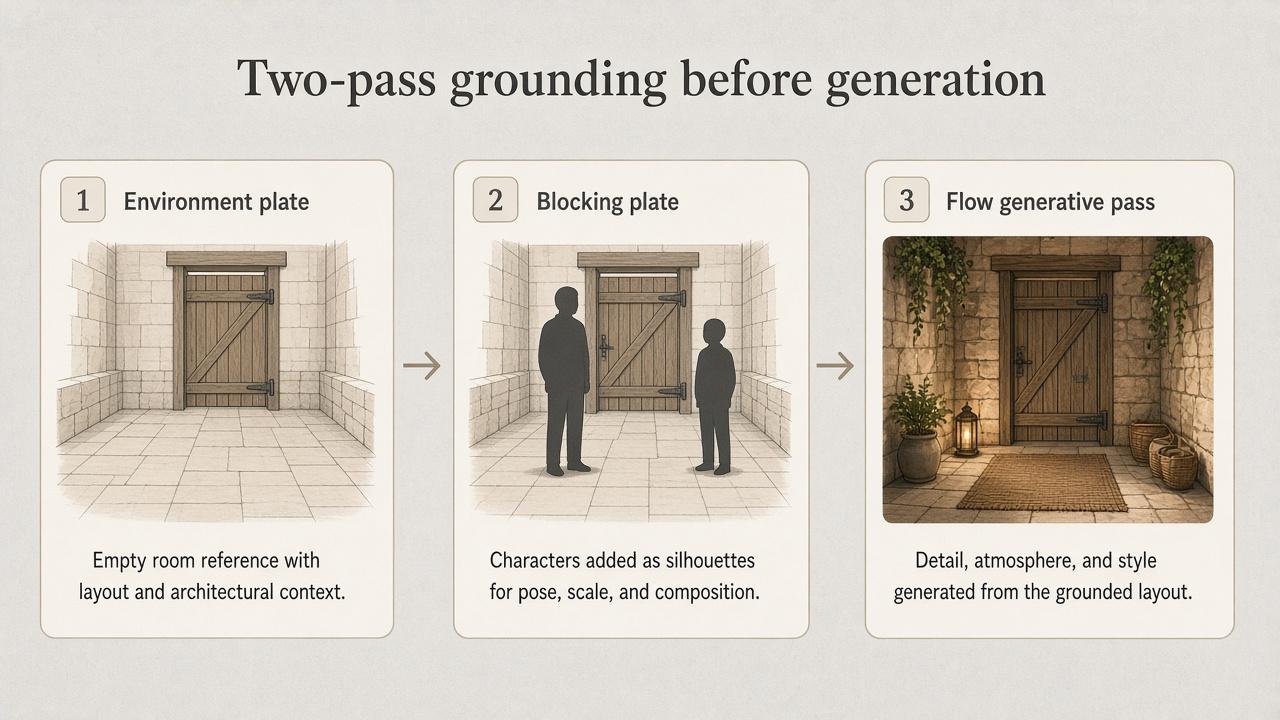
A clip can look finished and still be the wrong shot.